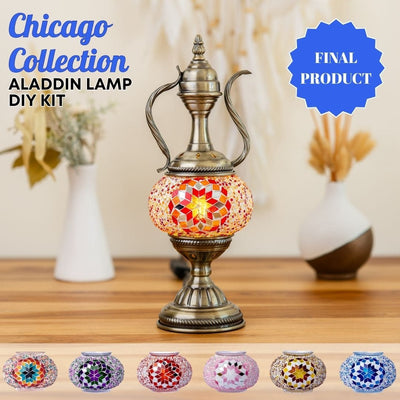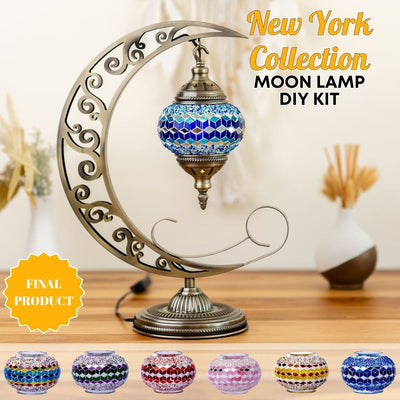

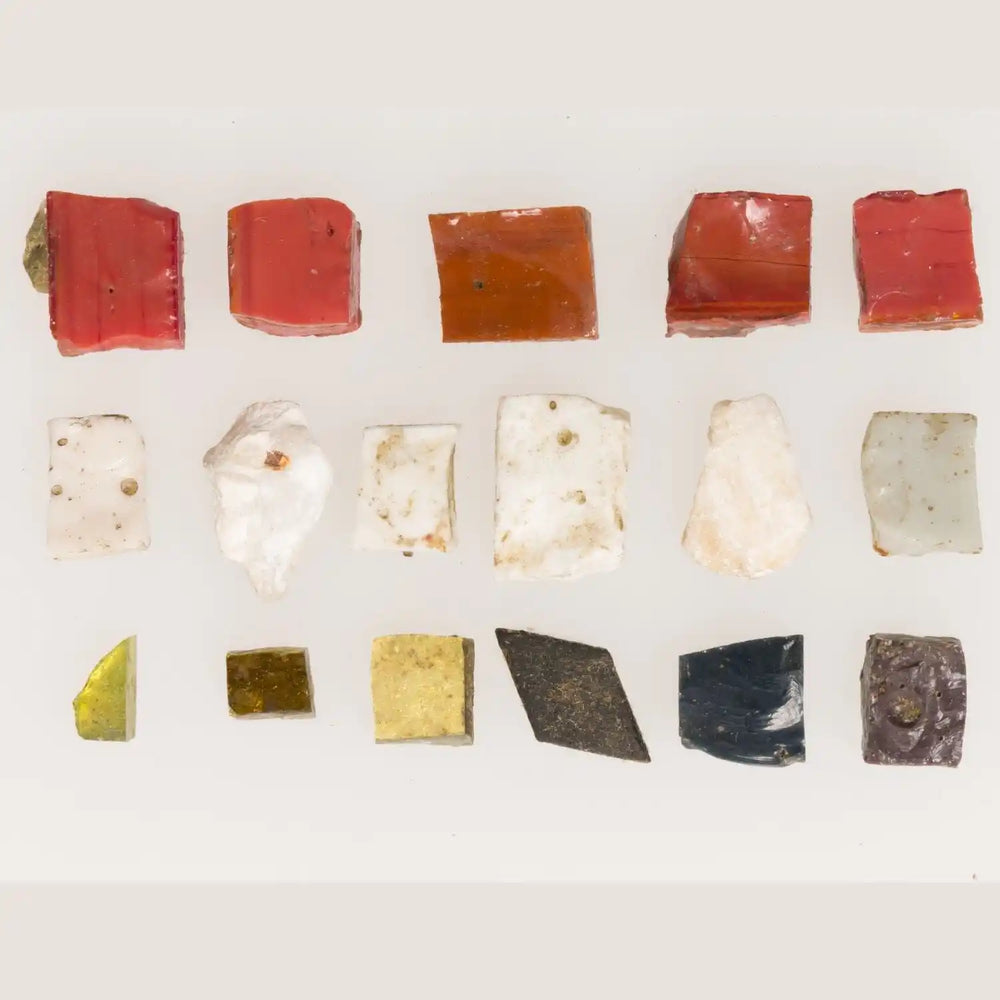
Mosaic art is one of humanity's oldest and most enduring art forms, a practice of assembling small fragments of glass, stone, or ceramic into unified, luminous compositions. From ancient Greek pebble floors to the glowing Turkish lamps of today, mosaics have always transformed broken pieces into something whole and beautiful.
Quick Navigation
Definition of Mosaic Art

In its simplest form, a mosaic is created by adhering small pieces of various materials onto a surface to form meaningful patterns. These pieces, stone, glass, seashell or ceramic, are known collectively as tesserae.
Individually each tessera conveys little; together, carefully arranged in proportion, they form narrative images. This makes mosaic a visual storytelling art, with stones and glass acting as "letters." Mosaics sit on the surface of a substrate rather than being carved into it, differentiating them from inlay work where pieces are set into recessed cavities.
A Brief History of Mosaic Art

Ancient Greece and Rome: Mosaic art began in the ancient Greek world, where simple pebble floors were laid for practical reasons. By the 5th century BCE these evolved into mythological scenes. The Romans expanded the tradition. Masterpieces like the Alexander Mosaic from Pompeii, composed of over one million tiny tesserae, achieved near-photographic realism.

Byzantine Empire: Mosaics moved from floors to walls, ceilings and domes. Artisans used gold-backed glass to depict Christ, the Virgin Mary and saints. Hagia Sophia in Istanbul and San Vitale in Ravenna still showcase this grandeur. Explore our deep-dive on Byzantine mosaic art and its influence on sacred architecture.
Islamic Art (7th century): Due to religious restrictions on human figures, artists focused on geometric patterns, calligraphy and vegetal motifs. The Umayyad Mosque in Damascus and the Dome of the Rock are renowned examples. Read our guide on Islamic mosaic art and design inspiration.
Renaissance to Modern: Antoni Gaudí revitalized mosaics in Barcelona with his "trencadís" technique. Today mosaics appear on subway walls, parks, schools and handmade Turkish lamps.
Materials Used in Mosaics
- Colored glass: The most common material in modern mosaics. Both transparent and opaque glass refract light to create vivid tones, adding ambiance in mosaic lamps and murals.
- Mirror pieces: Mirrors provide sparkle and contrast, bouncing light back to highlight certain areas of the composition.
- Beads: In mosaic lamps, tiny beads fill gaps and link larger pieces, diffusing light in a softer way than grout.
- Ceramics and piqué assiette: Matte ceramic tiles balance the shine of glass and bring rich color to walls, architecture and tabletops.
- Metallic details: Gold- or silver-leaf glass harkens back to Byzantine and Islamic mosaics, lending sacred or luxurious qualities.
- Hand-cut vs. machine-cut: Hand-cut pieces are irregular and lend character; machine-cut pieces are uniform and precise. In mosaic lamps, the charm often lies in uneven edges and how they refract light.
Want to Work with These Materials Yourself?
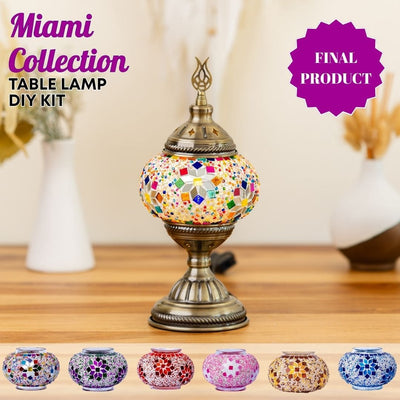
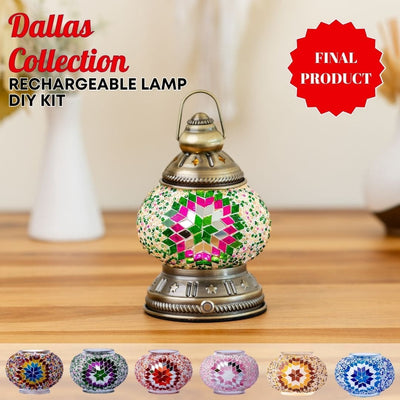
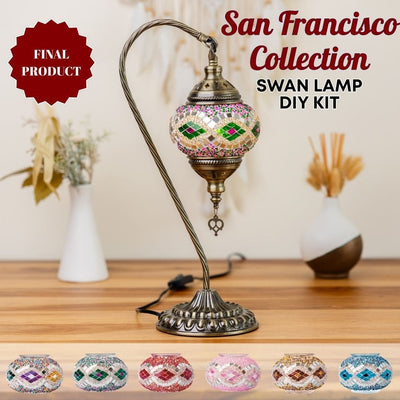
Our Turkish Mosaic Lamp DIY Kits include authentic hand-cut glass tiles, seed beads, silicone adhesive and a brass base. Everything you need to create your own glowing masterpiece at home.
Shop DIY Kits Book a WorkshopMajor Mosaic Art Styles
Mosaic art varies widely across regions and periods. The main styles include:
Opus Tessellatum
One of the earliest methods. Small square tesserae are laid in straight rows to form clear images or repeating patterns. Roman villas often feature this style.
Opus Vermiculatum
Uses very small pieces to create gradients and curves that mimic painting. Lines follow the shape of hair or leaves to add fine detail.
Opus Sectile
Uses larger, specially cut stones or shells fitted together like inlay. Roman and Byzantine floors often employed this method.
Byzantine Glass Mosaics
Richly colored glass with gold leaf backing decorates domes and ceilings with bold spiritual figures. This style directly inspires Turkish mosaic lamps today.
Trencadís
Popularized by Antoni Gaudí, this style employs broken ceramic or glass shards arranged in spontaneous patterns. Modern mosaic lamps often adopt this playful look.
Glass-on-Glass (GOG)
Colored glass placed directly onto a clear glass base produces a stained-glass effect when backlit. Ideal for mosaic lamps and windows, this is the foundation of the Turkish lamp tradition.
Techniques in Mosaic Art
Different styles often employ specific application techniques:
-
1Direct MethodTesserae are affixed directly to the final surface. Allows immediate control over spacing and alignment, popular for curved surfaces like mosaic lamps.
-
2Indirect MethodPieces are laid face-down on a temporary backing then transferred en masse. Yields clean, precise compositions on large floors or murals.
-
3Double Indirect MethodTesserae are placed face-up on a temporary surface, then transferred to a second backing before final installation. Allows artists to review and adjust the design beforehand.
-
4Glass-on-Glass TechniqueColored glass is layered on a clear base and set with adhesive or resin. Minimal grout preserves light transmission, the core technique in Turkish mosaic lamp making.
-
5Trencadís / Piqué AssietteGaudí's spontaneous, organic method uses irregular shards to create expressive patterns, ideal for garden ornaments or decorative lamps.
-
6Mesh-Mounted MosaicsArtists attach tesserae to fiberglass mesh off-site, then install the panels with adhesive. Efficient for repeating patterns or commercial décor.
Where You'll Find Mosaic Art Today
🕌 Religious Architecture
Churches, mosques and temples still feature mosaics that tell sacred stories and create a devotional atmosphere.
🏠 Interior Design and Home Décor
Mosaic finishes are popular in kitchens, bathrooms and around fireplaces. Handmade mosaic lamps offer warm, artistic ambiance.
🏙️ Public and Community Art
Cities worldwide use mosaic murals, plaza installations and park benches to beautify spaces and tell local stories.
🧠 Education and Therapy
Creating mosaics encourages creativity, patience and focus. Its tactile qualities make it beneficial in art therapy and special-education settings. Learn about the healing power of mosaic workshops.
🎊 Creative Experiences
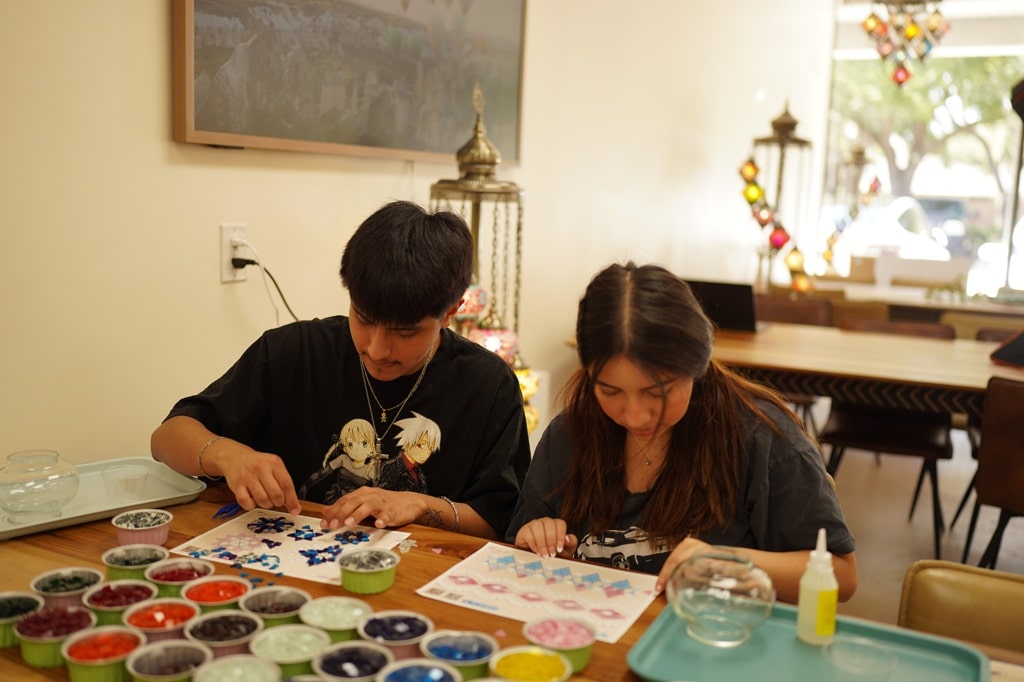
Mosaic workshops have become popular for couples and team building and private group events.
🏺 Everyday Objects
Coasters, bowls and household items can be embellished with mosaic, turning ordinary objects into art. DIY kits make this accessible to everyone.
Experiencing Mosaic Art with Pedalisa Art
Pedalisa Art blends traditional mosaic craftsmanship with contemporary design. Each mosaic lamp, wall piece or table ornament is handcrafted and unique. By combining hand-cut glass, mirrors, beads and other materials, Pedalisa Art products aim to bring warmth and storytelling into living spaces.
The historical roots and diverse materials of mosaic art inspire every Pedalisa Art collection. To explore the two most influential traditions in depth, see our guides on Byzantine mosaic art and Islamic mosaic art and design. If you wish to bring centuries-old art into your home or workspace in a modern form, explore Pedalisa Art's workshops and products. Each piece reflects the power of a unified whole created from individual fragments, embodying the timelessness and creativity of mosaic art.
Frequently Asked Questions About Mosaic Art
What is mosaic art in simple terms?
Mosaic art is the practice of creating images or patterns by assembling small pieces of colored glass, stone, or ceramic (called tesserae) onto a surface. The pieces are held together with adhesive and grout, forming a unified composition from many individual fragments.
What is the oldest form of mosaic art?
The oldest known mosaics date back to ancient Mesopotamia (around 3000 BCE), where cone-shaped clay pieces were pressed into walls to create geometric patterns. The Greek pebble mosaic tradition (5th century BCE) is considered the direct ancestor of the classical mosaic art we recognize today.
What materials are used in mosaic art?
Traditional mosaics use stone, marble, and ceramic tesserae. Modern mosaics commonly use colored glass, mirror pieces, glass beads, and metallic smalti (gold or silver-leaf glass). Turkish mosaic lamps specifically use hand-cut colored glass tiles and seed beads on a clear glass globe.
What is the difference between Byzantine and Islamic mosaic art?
Byzantine mosaics typically feature figurative imagery, saints, Christ, and religious narratives, rendered in gold-backed glass on church domes and walls. Islamic mosaics focus on intricate geometric patterns, calligraphy, and vegetal motifs due to religious restrictions on depicting human figures. Both traditions profoundly influenced the Turkish mosaic lamp aesthetic.
Can beginners make mosaic art?
Absolutely. Mosaic art is one of the most beginner-friendly art forms because it requires no drawing or painting skill. A structured mosaic workshop or a complete DIY kit provides all the materials and guidance needed to create a beautiful Turkish mosaic lamp in 2 to 3 hours.
What is a Turkish mosaic lamp?
A Turkish mosaic lamp (also called a Turkish lantern or Ottoman lamp) is a handcrafted light fixture made by adhering colored glass tiles and beads onto a clear glass globe. When illuminated, the glass pieces cast colorful, kaleidoscopic patterns of light. The tradition originates from Ottoman-era decorative arts and is closely linked to the Byzantine and Islamic mosaic heritage.
Create Your Own Mosaic Art
From guided studio workshops to at-home DIY kits, Pedalisa Art makes the ancient tradition of mosaic accessible to everyone.