
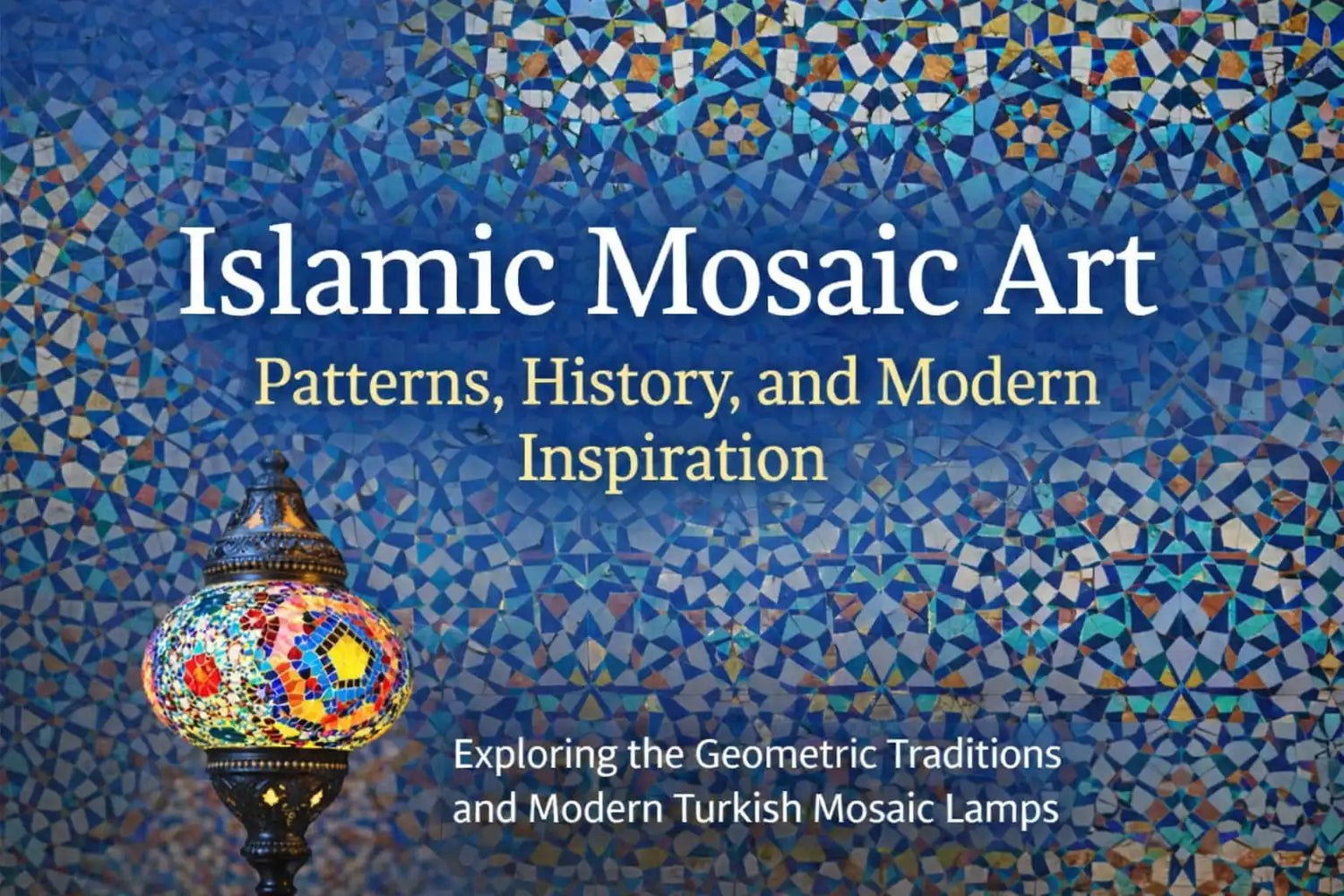
Islamic mosaic art is one of the most visually powerful traditions in world art. Built from tiny pieces of glass, stone, or glazed tile, these designs communicate spiritual meaning through geometry, botanical motifs, and calligraphy rather than figurative imagery. Across centuries, Islamic mosaics transformed architecture into immersive visual experiences shaped by rhythm, symmetry, and light.
Today, the same design language continues to inspire modern decorative art especially Turkish mosaic lamps, where color, pattern, and illumination come together in a hands-on creative experience.
Islamic Mosaic Art: History, Patterns, and How to Create a Mosaic Lamp Inspired by Sacred Design
Quick Navigation

A richly decorated interior view of the Dome of the Rock in Jerusalem, featuring Islamic geometric mosaic patterns, intricate muqarnas vaulting, and blue-and-gold calligraphic tilework from the early Islamic period.
What Is Islamic Mosaic Art?
Islamic mosaic art is a decorative art form created by assembling small pieces called tesserae into a unified pattern. The tradition grew across the Islamic world from early architectural mosaics to later tile-based systems that allowed for extremely precise geometric compositions. While techniques were influenced by earlier Mediterranean practices, Islamic art developed a distinct visual identity focused on abstraction, repetition, and harmony. To understand the broader context, explore our guide on what is mosaic art and how it has evolved across civilizations.
Why Islamic Mosaics Avoid Figures
In many religious contexts, Islamic art emphasizes aniconism, avoiding depictions of living beings so spiritual meaning is expressed through non-figurative design. This is one reason Islamic mosaics became a celebrated space for geometry, plant-inspired ornament, and sacred text. The result is an art form that feels timeless: symbolic, structured, and deeply immersive.

A close-up view of the floral and gold-toned mosaic decorations inside the Shah Mosque (Imam Mosque) in Isfahan, showcasing Safavid-era Islamic architectural artistry.
Geometric Patterns & Meaning
Geometric design is the signature language of Islamic mosaics. Stars, polygons, interlaced bands, and repeating grids produce patterns that feel infinite, without a clear beginning or end. This "endless" structure is more than visual decoration: it creates a rhythmic sense of order, unity, and balance that many viewers read as spiritual symbolism.
- Star patterns (often 8, 10, or 12 points) create a radiant focal energy.
- Interlacing geometry symbolizes connection and continuity.
- Repetition guides the eye like a visual form of contemplation.

A Zellige mosaic tile composition arranged into an Islamic star pattern with bright glazed surfaces, inspired by the geometric craftsmanship of the Alhambra Palace in Granada, Spain
Floral Motifs & Calligraphy
Alongside geometry, Islamic mosaics often feature arabesques, flowing vines, leaves, palmettes, and rosettes that evoke growth and paradise imagery. Calligraphy adds a second layer of meaning: sacred text and devotional phrases become visual architecture, turning the wall itself into a message.

An ornate muqarnas and calligraphic tilework detail inside the Green Mosque (Yeşil Camii) in Bursa, featuring gold-accented geometric forms, floral ornamentation, and repeating Islamic border patterns from the early Ottoman period.
Materials & Techniques
Early mosaics used glass and stone tesserae set into mortar. Later traditions expanded into glazed ceramic systems, where artisans cut colored tiles into precise shapes and assembled them like a puzzle. This is why "mosaic art" is also a story of materials: reflective glass, luminous glaze, and the magic of light moving across a surface.

Handcrafted mosaic lamps created by our guests using colorful glass tesserae, showcasing the creative process and vibrant designs from a Turkish mosaic lamp workshop.
Regional Traditions Across the Islamic World
Islamic mosaic traditions evolved differently across regions, shaped by local materials, craft systems, and architectural needs. In some areas, gold-glass and luminous interiors dominated; in others, glazed tile mosaics created brilliant color geometry. What stays consistent is the core idea: spiritual design through abstraction, precision, and harmony.

An intricate Islamic geometric rosette with floral ornamentation, inspired by the Mughal-era design traditions of Humayun's Tomb in Delhi, featuring symmetrical patterns and decorative border detailing.
Mosaic Tiles: Why This Keyword Matters
If you found this page by searching "mosaic tiles," you're not alone. This phrase often signals people who want to understand the visual style and explore practical ways to use mosaic tilework in design. Islamic mosaics are a top reference point because they demonstrate how tile can create structure, movement, and meaning not just decoration.
If you're curious about how mosaic tiles translate into a modern creative experience, Turkish mosaic lamp making is one of the most approachable ways to explore this art form in real life.
From Sacred Architecture to Turkish Mosaic Lamps
Turkish mosaic lamps echo the spirit of Islamic mosaic design through color, symmetry, and light. While they're not architectural mosaics, they share the same idea: small pieces of glass and pattern logic coming together to create something radiant and meaningful.

Handmade Turkish mosaic lamp with colorful glass tiles and a warm, inviting glow, reflecting the beauty of traditional craftsmanship and ambient home decor.
At Pedalisa Art, you can explore this heritage through a modern, beginner-friendly experience that makes it easy to make Turkish lamps step-by-step. Whether you join a guided mosaic lamp making class or visit one of our pop-up events, you'll work with colorful glass pieces, choose a pattern, and build a glowing mosaic piece step-by-step.
If you prefer to create at home, our DIY mosaic lamp options include a complete DIY Turkish mosaic lamp kit with materials, tools, and clear instructions. It's a relaxing way to bring the look of Islamic geometry into your space through a turkish lamp you made yourself no prior experience needed.
If you want to browse mosaic-inspired items and experiences, you can explore: Shop, Ready Handmade Turkish Mosaic Lamps, or DIY Mosaic Lamp Kits.
Experience Mosaic Lamp Making in the USA
Reading about Islamic mosaic art is inspiring, but creating something with your own hands is unforgettable. At Pedalisa Art, our workshops are designed for beginners: you choose a lamp model, pick a pattern, customize colors, and build a glowing mosaic piece step-by-step.

Guests creating their own mosaic lamps at a hands-on Turkish mosaic lamp workshop, enjoying a creative and immersive art experience.
Planning something special? We also offer private group experiences for birthdays, team-building, and celebrations: Private Group Events.

Everything you need to create your own Turkish mosaic lamp at home, colorful glass pieces, tools, and easy-to-follow instructions in one complete DIY kit.
Ready to Create Something Inspired by Mosaic Design?
Explore a hands-on mosaic lamp workshop or discover DIY kits and handmade lamps in our shop.
FAQ
What is Islamic mosaic art?
Islamic mosaic art is a decorative tradition that uses small pieces of glass, stone, or tile to create geometric patterns, floral motifs, and calligraphy often emphasizing abstraction and repetition.
Why are there usually no people or animals in Islamic mosaics?
In many sacred contexts, Islamic art avoids depicting living beings and instead expresses meaning through geometry, botanical ornament, and calligraphic design.
How does Islamic mosaic design connect to Turkish mosaic lamps?
Turkish mosaic lamps echo the same design language color rhythm, symmetry, and light by assembling glass pieces into patterns that glow from within.
Where can I try mosaic lamp making in the USA?
You can join a guided Turkish mosaic lamp workshop and create your own lamp step-by-step: Book a Mosaic Workshop.