
Glass has shaped human life for thousands of years, from volcanic obsidian used as cutting tools, to the glassblowing revolution that made everyday glassware possible, and the intricate traditions of decorative glass that continue today. In this guide, we'll explore the science and history of glass, and how those traditions connect to the glowing art of Turkish mosaic lamps.
You'll learn why glass is an amorphous solid, how ancient techniques evolved, and how Ottoman-era aesthetics influenced decorative lampmaking. (If you're mainly here for the hands-on experience, you can jump to the workshop section below.)
Quick Navigation
The Science and History of Glass
Technically, glass is an amorphous solid. Its atoms are disordered like a liquid, yet it behaves as a solid. A common myth suggests old windows are thicker at the bottom because glass "flows" over time. This is false, older glass was simply made with uneven thickness, and builders installed the heavier side down for stability.
New to the craft? Our guide What Is Mosaic Art? explains its meaning, history, and main types.
Nature's First Glass: Obsidian
Long before humans manufactured glass, nature created obsidian, volcanic glass formed by rapidly cooling lava. Its sharp edges were used for tools and blades, proving glass has been part of human innovation from the very beginning.
The Roman Revolution
While Egyptians produced early glass objects, the invention of the glassblowing pipe in the 1st Century BC (Syria–Palestine region) transformed glass into a widely available material. The Roman Empire spread this technique across Europe, making glassware and window panes common in daily life.

Medieval Churches & Stained Glass
During the medieval period in Europe, stained glass became an essential part of cathedral architecture. The colorful glass windows in Gothic cathedrals such as Notre-Dame and Chartres Cathedral were not only decorative but also served as a means of telling biblical stories to the largely illiterate population.
These windows filtered light into the churches, creating an ethereal atmosphere that was believed to bring divine light into the sacred space. The art of stained glass flourished, with artisans using vibrant colors to depict religious scenes and themes.
Key Features of Medieval Stained Glass:
- Visual Storytelling: Religious scenes were depicted in the windows, offering spiritual lessons to the public.
- Gothic Influence: The pointed arches and intricate designs of the Gothic style influenced the layout of stained glass windows.
- Symbolism: The use of color and light symbolized purity, holiness, and divine intervention.

Ottoman Artistry: The Soul of Our Lamps
While Europe focused on the grand stained glass of cathedrals, Ottoman artisans developed a different relationship with glass, one focused on intimate lighting, geometry, and vibrant color within the home and social spaces. This tradition is the direct ancestor of the mosaic lamps we craft today.
Notable Techniques
- Çeşm-i Bülbül (Nightingale's Eye): A complex technique using twisted colored glass rods to create signature spiral patterns, often associated with the Beykoz district of Istanbul.
- Beykoz Ware: Elegant, gilded, and enameled glass that rivaled the finest Venetian works, emphasizing refined forms and ornamentation.
The Evolution into Mosaic Lamps
Authentic Turkish mosaic lamps draw inspiration from these traditions. Unlike the painted glass of the industrial era, our lamps use colored soda-lime glass tiles. The color is inherent in the material, ensuring it never fades. Each piece is hand-cut and placed to diffuse light softly, mimicking the warm glow of traditional oil lamps used in Ottoman palaces.
Figure 3: The intricate stained glass windows of Muradiye Mosque, the architectural inspiration behind the colored glass used in mosaic lamps.
Development in Europe & America
In the 19th and 20th centuries, glass production became more industrialized. The Industrial Revolution paved the way for the mass production of glass, particularly with the invention of the float glass method by Alastair Pilkington in the 1950s. This innovation led to the smooth, uniform glass used in modern architecture and windows.
In America, glass production continued to evolve with the establishment of large-scale factories producing window glass, jars, and bottles. In the 20th century, glass became essential for technological advancements, such as in fiber optics and electronics. Glass technology has also played a significant role in the development of more durable and aesthetic products like smartphones and solar panels.
While modern technology has given us perfect, transparent glass, it has left a craving for the imperfect, soulful beauty of handmade art. This is where the Turkish Mosaic Lamp Workshop brings history back to life.

What is a Turkish Mosaic Lamp Workshop?
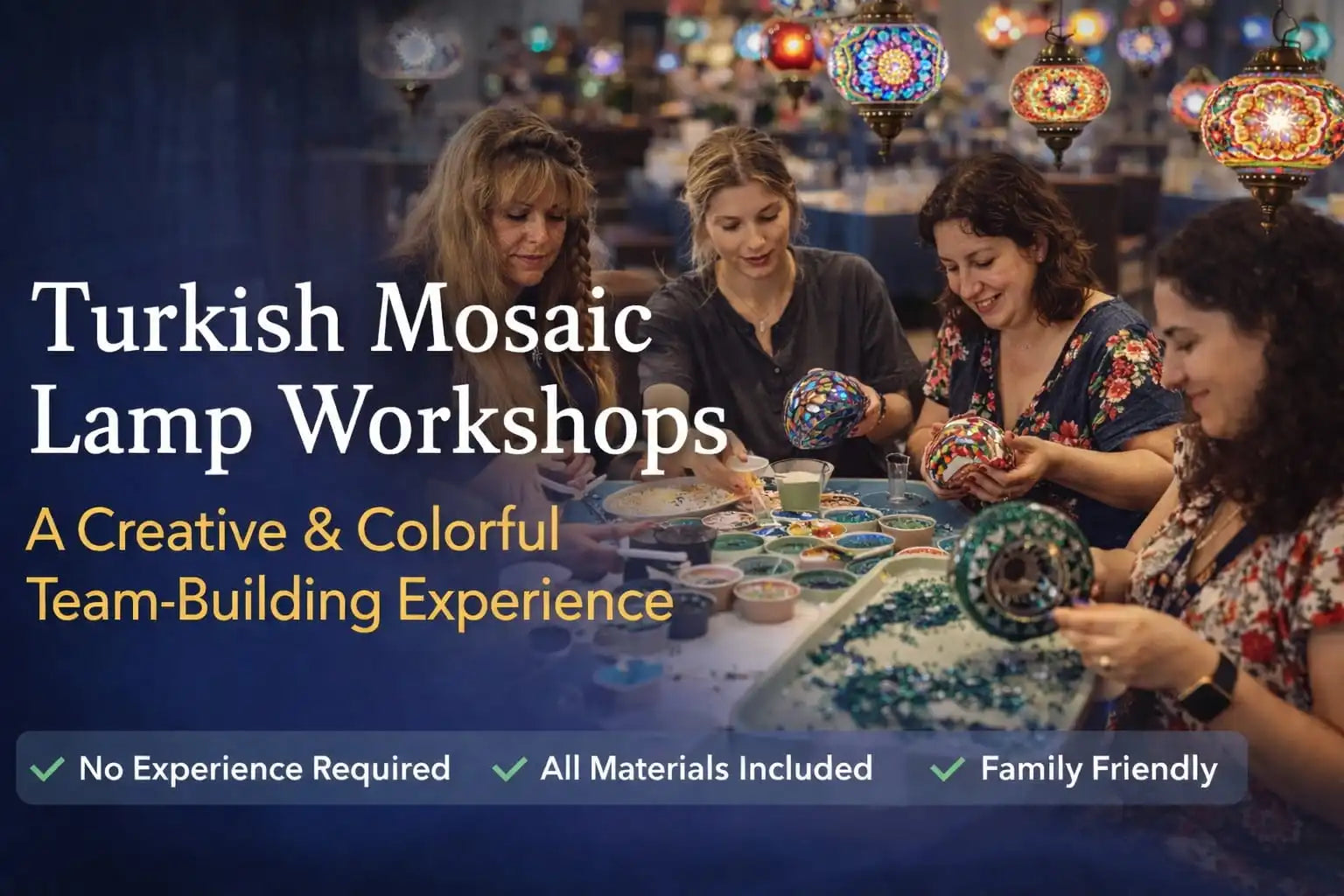
A Turkish mosaic lamp workshop is a hands-on cultural craft experience where you design and assemble a traditional mosaic lamp using pre-cut glass tiles and beads. Participants follow a step-by-step process, selecting patterns, placing glass pieces, and finishing the surface, resulting in a functional lamp that reflects personal style through color and geometry.
What to expect (step-by-step)
- Introduction: A short overview of mosaic traditions and glass techniques.
- Pattern Selection: Choose a geometric layout or create a freestyle design.
- Crafting: Apply adhesive and place colored glass tiles onto the globe.
- Beading: Fill gaps with glass beads for texture and shimmer.
- Completion: Final finishing steps so your lamp is ready to assemble and enjoy.
🌟 Ready to Experience This Yourself?
Join a guided Turkish mosaic lamp workshop near you, no experience needed. You'll leave with a glowing, handmade lamp you designed from scratch.

What's Included in Your Experience?
All materials are provided, including the lamp base, glass globe, glue, and a wide selection of colored tiles and beads. Many workshops also include cultural refreshments like traditional Turkish tea, Turkish delight, and homemade-style baklava.
For group celebrations and private bookings, you can explore options here: Private Group Events.
Frequently Asked Questions (FAQ)
Is glass really a liquid that moves?
No. Glass is a solid. The myth comes from old manufacturing techniques, not the material itself.
Do I need experience to make a mosaic lamp?
No. It's beginner-friendly and guided step-by-step.
Is the glass used in the workshop sharp?
Tiles are pre-cut and typically tumbled to reduce sharp edges; supervised children can participate depending on age guidelines.
Can I make a lamp at home?
Yes. A DIY option is available here: DIY Mosaic Lamp Kit.

From Ancient Art to Modern Wellness
Today, glass powers technology through fiber optics and strengthened screens, yet many people are drawn back to tactile, hands-on crafts. The repetitive placement of colorful tiles can encourage a "flow state," which is why mosaic crafts are often associated with relaxation and creative wellness.
Find a Workshop Near You
Browse upcoming pop-up locations and dates across the US on our calendar.
CALIFORNIA Los Angeles | San Diego | Orange County | San Francisco
TEXAS Houston | Austin | Dallas | San Antonio
EAST COAST New York City | Washington DC | Boston | New Jersey
Looking for a Turkish mosaic lamp workshop near you? Browse our calendar to find upcoming pop-up locations and dates.


Bring Glass History to Life, With Your Own Hands
From ancient obsidian to Ottoman artistry, glass has always been a medium of beauty and meaning. Now it's your turn. Book a workshop, grab a DIY kit, or gift the experience to someone special.